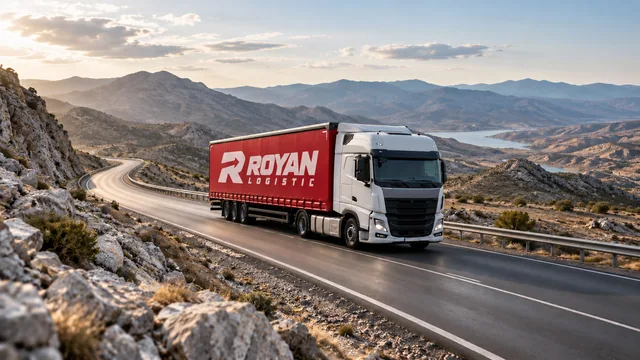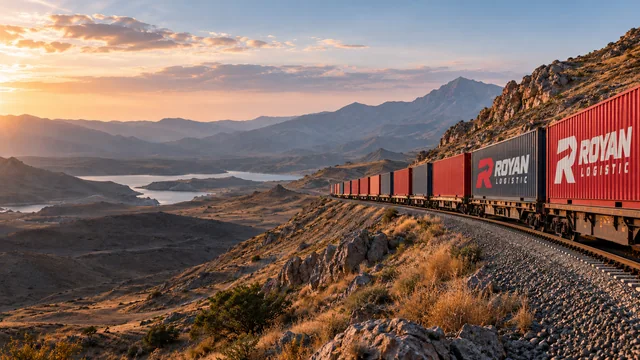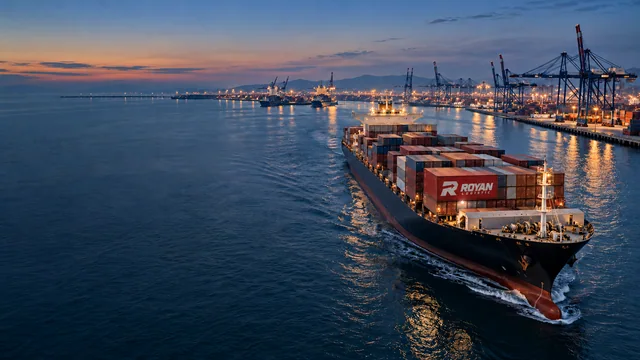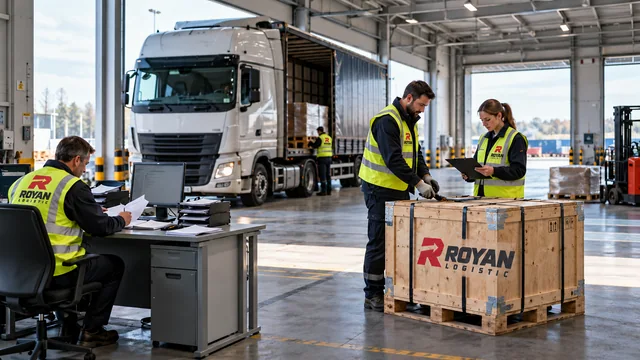
Turkmenistan is Iran's direct neighbour to the north-east, and most road and rail traffic from Iran to Central Asia passes through it. Ashgabat is only a few hundred kilometres by road from Mashhad, yet Turkmenistan's permit and border regime for foreign trucks makes careful planning essential. Whether a gate is open to cargo, whether a truck may drive to the delivery address and which route it must follow can change from one period to the next. We answer these questions first and only then dispatch the cargo. For the regional picture, see Central Asia freight.
What we do on Iran–Turkmenistan shipments
- Understand the load and destination: loading address in Iran, delivery address, cargo type, packing, pallets, dimensions, weight and target date.
- Confirm entry rules: we check the rules for foreign-plated trucks on the shipment date, including any transshipment requirement.
- Arrange permits and visas: the transit permit, pass documents and driver visa are ready before the truck reaches the border.
- Match documents: description, HS code, package count and weight identical on invoice, packing list and CMR.
- State the costs: we say clearly whether permits, road fees, transshipment and port charges are included.
- Share a tracking link: border exit, transshipment, delivery dates, current location and documents in one place.
Delivery points in Turkmenistan
| City / region | Location | Usual entry from Iran |
|---|---|---|
| Ashgabat | Capital, in the south, close to the Iranian border | Bajgiran–Gaudan or Lotfabad–Artyk (from Mashhad) |
| Mary and Turkmenabat | East; industrial and farming centres on the road to Uzbekistan | Sarakhs–Saragt (road and rail) |
| Turkmenbashi and Balkanabat | Caspian coast and the west; Turkmenbashi international port | Incheh Borun–Etrek rail or sea link from Iran's Caspian ports |
| Dashoguz | North, bordering Uzbekistan's Khorezm region | Via Sarakhs with inland distribution; confirmed per shipment |
Iran–Turkmenistan routes and approximate transit times
Times below are approximate for cargo leaving Tehran; from Mashhad and Khorasan they are usually a day or two shorter. Permits, border queues, wagon and vessel schedules and season all affect them.
| Route | Main destinations | Approx. transit from Tehran | Watch point |
|---|---|---|---|
| Road: Tehran → Mashhad → Quchan → Bajgiran–Gaudan | Ashgabat | 4–6 days | Mountain road; snow in winter |
| Road: Mashhad → Lotfabad–Artyk | Ashgabat, Tejen | 4–6 days | Gate availability for cargo confirmed per period |
| Road: Mashhad → Sarakhs–Saragt | Mary, Turkmenabat; transit to Uzbekistan and Tajikistan | 5–7 days | Designated route and escort may apply to transit cargo |
| Rail: Mashhad → Sarakhs → Tejen | Ashgabat, Mary, Turkmenabat | 7–12 days | Gauge change at Sarakhs (1435 mm → 1520 mm) or transshipment |
| Rail: Gorgan → Incheh Borun–Etrek (Kazakhstan–Turkmenistan–Iran line) | Balkanabat, Bereket, the west; transit to Kazakhstan | 7–12 days | Wagon allocation and gauge change at the border |
| Caspian: Amirabad or Anzali port → Turkmenbashi port | Turkmenbashi, Balkanabat | Depends on vessel schedule | Irregular sailings; wind delays |
For Ashgabat, road via Mashhad is usually fastest; for Mary, Turkmenabat and transit to Uzbekistan, Sarakhs is the main gate. Rail can lower the cost per tonne for bulky or heavy cargo (see rail freight), and Caspian deliveries are planned together with our sea freight team.
Iran–Turkmenistan border gates
- Sarakhs – Saragt: road and rail, east of Mashhad; main gate for Mary, Turkmenabat and transit to Uzbekistan and Tajikistan.
- Lotfabad – Artyk: road gate towards the Ashgabat–Tejen area.
- Bajgiran – Gaudan: closest gate to Ashgabat, about an hour from the capital.
- Incheh Borun – Etrek: on the Kazakhstan–Turkmenistan–Iran railway, east of the Caspian.
- Caspian ports: Amirabad and Anzali in Iran; Turkmenbashi international port.
Which gates accept trucks, and on what terms, changes over time and is confirmed during planning.
Transit permits and transshipment
Foreign-plated trucks, Iranian ones included, need a transit permit (usually a few working days) and drivers need a visa. Road-use charges, fuel price differences, insurance and disinfection may be collected at the border. Depending on the period, a truck may drive to the delivery address; may have to follow a designated route such as Sarakhs–Farap in a daytime convoy with escort; or the cargo may be transshipped to a Turkmen truck at the border. Because this affects time and cost, we confirm it at the quotation stage. Where applicable, cargo moves under customs seals with a TIR carnet; the Iranian export declaration is handled with our customs clearance service.
Transit through Turkmenistan to Central Asia
Turkmenistan is the main transit country for cargo from Iran to Uzbekistan, Tajikistan and Kazakhstan. Trucks entering at Sarakhs continue via Mary and Turkmenabat to the Farap–Alat gate towards Bukhara, while the Incheh Borun–Etrek railway links Iran with Kazakhstan. See Uzbekistan, Tajikistan and Kazakhstan freight.
Why full truck loads dominate
Regular groupage services to Turkmenistan are limited, and permits and border charges are levied per truck, so most cargo moves as a full truck (about 33 euro pallets and 24 tonnes). Building materials and polymers move by full truck or wagon, fresh produce and dairy in reefers, heavy machinery as project cargo, and small lots as shared space on Ashgabat-bound trucks.
Process
- Request: via the quote form or e-mail; you receive a tracking code starting with RYN-.
- Route and permit check: road, rail or Caspian link, and the current Turkmen entry rules.
- Permits and documents: transit permit, driver visa and a checked document set.
- Loading and export customs: photos, CMR and invoice in one folder; Iranian export declaration completed.
- Border crossing: Iranian exit, Turkmen entry and any transshipment updated on the tracking link.
- Import clearance and delivery: coordinated with the consignee's customs broker.
Document checklist
- Commercial invoice and packing list (with HS codes)
- Certificate of origin
- CMR consignment note; TIR carnet where applicable
- Iranian export customs declaration
- Turkmenistan transit permit, pass documents and driver visa
- Conformity certificates by product group; health and phytosanitary certificates for food
Turkmenistan applies its own import regime. Requirements are confirmed against current regulations for each shipment, and payment and documentation requirements are reviewed per shipment.
Seasonal planning
Summer temperatures in the Karakum can exceed 45°C, so we plan insulation, pre-cooling or a reefer. In winter, snow can slow the Quchan–Bajgiran mountain road and we keep Sarakhs or rail as a fallback. Around Nowruz in late March, border and customs processing slows. In autumn and winter, Caspian winds can delay sailings to Turkmenbashi.
What affects the price
Mode and gate, Turkmen permits and road fees, any transshipment and local tractor cost, wagon, terminal and port charges, waiting days, volume, special equipment, season, fuel and exchange rates. We do not publish fixed rates; every quote lists what is included.
Typical cargo
We plan for Iranian manufacturers and traders exporting to Turkmenistan and for suppliers to construction and infrastructure projects there: cement, ceramic tiles and stone, polymers and other petrochemicals, steel, fresh produce, dried fruit, dairy and packaged food. Dangerous goods move with ADR-compliant vehicles and drivers.
Why Royan Logistic
- Tehran-based planning focused on the north-eastern gates and Central Asian transit.
- Road, rail and Caspian options assessed together.
- Communication in Persian, English, Russian, Turkish and Chinese.
- A tracking link for every shipment and all documents in one folder.
For a quote, send the loading address in Iran, delivery address, cargo type and HS code, packing, pallet count, dimensions, total weight, target date and any special handling needs.
Frequently asked questions
How long does freight from Iran to Turkmenistan take?
From Tehran, roughly 4–6 days by road to Ashgabat and 5–7 days via Sarakhs to Mary and Turkmenabat; rail takes about 7–12 days. From Mashhad it is usually a day or two shorter. Permits, border queues and wagon timing can extend these ranges.
How is the Turkmenistan transit permit obtained?
It is applied for before the shipment with truck, driver and cargo details and usually takes a few working days. We do not send a truck to the border without it. Rules change often, so they are reconfirmed for each shipment.
Can an Iranian truck enter Turkmenistan?
It depends on the period. Sometimes the truck drives to the delivery address, sometimes it follows a designated route with escort, and sometimes cargo is transshipped to a Turkmen truck. We confirm the rule for your shipment date when quoting.
Which border gates are used?
By road: Sarakhs–Saragt, Lotfabad–Artyk and Bajgiran–Gaudan; by rail: Sarakhs and Incheh Borun–Etrek; by sea: Amirabad or Anzali to Turkmenbashi. Which gates accept cargo changes over time and is confirmed during planning.
Is the Caspian route to Turkmenbashi a good option?
It can be, if the cargo is going to Turkmenbashi, Balkanabat or the west, alongside the Incheh Borun rail option. For Ashgabat and the east, road via Mashhad is usually shorter. The decision depends on the vessel schedule.
Can I send a small load to Turkmenistan?
Regular groupage is limited, so most cargo moves as a full truck. For small lots we look at shared space on Ashgabat-bound trucks.