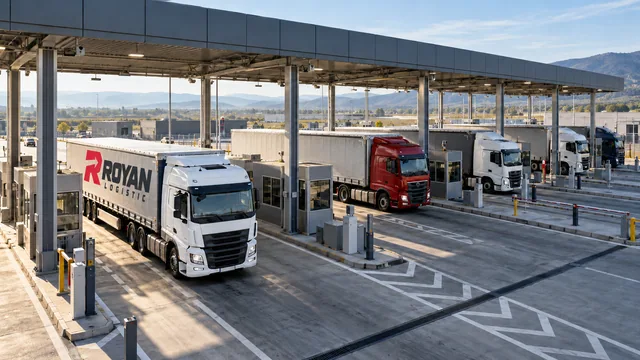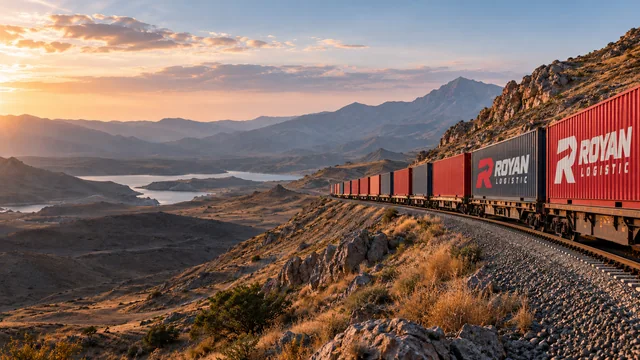
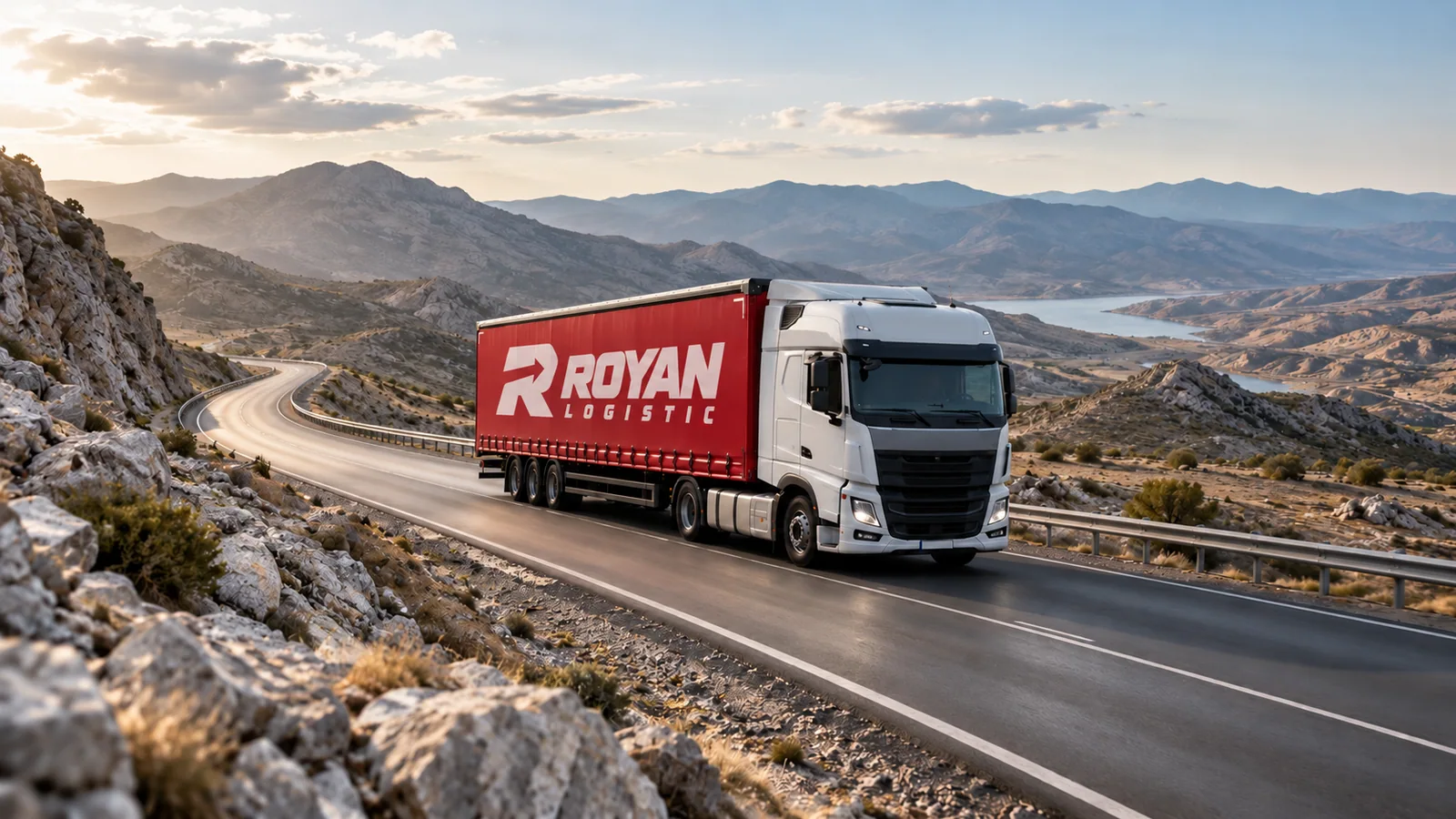
Iran is Royan Logistic's home market. From our head office in Tehran we organise imports into the country, exports for Iranian producers, distribution between Iranian cities and transit across Iranian territory. Iran sits between the Persian Gulf and the Caspian Sea and shares land borders with seven countries, which makes it a natural junction of the North–South and East–West corridors. We choose the gateway, transport mode and document set for each shipment based on the cargo, the destination and conditions on the planned date.
What we do in Iran
- Import into Iran: collection abroad, main carriage by road, sea or rail, arrival at an Iranian port or border crossing, customs clearance coordinated with a licensed customs broker, and delivery to the consignee's warehouse.
- Export from Iran: pickup at the factory or warehouse, export customs coordination and carriage to Turkey and Europe, Iraq, the Caucasus, Central Asia, Russia, the Persian Gulf, India and China.
- Domestic distribution: moving containers and cargo from ports and border crossings to Tehran, Isfahan, Tabriz, Mashhad, Shiraz and other cities, as full truckloads (FTL) or groupage (LTL).
- Transit through Iran: cargo crossing Iran under customs seal with a TIR carnet or transit declaration, between the Persian Gulf, the Caspian, Turkey, Central Asia and Afghanistan.
Iran's main gateways
The table below lists the ports and border crossings we work with when planning shipments.
| Gateway | Type | Typical connections |
|---|---|---|
| Bandar Abbas (Shahid Rajaee port) | Sea port, Persian Gulf | Iran's main container port: UAE (Jebel Ali), India, China and the Far East; southern entry of the INSTC |
| Chabahar | Sea port, Gulf of Oman | India and the Indian Ocean; access to eastern Iran, Afghanistan and Central Asia |
| Bushehr | Sea port, Persian Gulf | Gulf feeder services; south-western Iran |
| Bandar Imam Khomeini | Sea port, Persian Gulf | Bulk and general cargo; Khuzestan and western Iran |
| Anzali, Amirabad, Astara, Nowshahr | Caspian ports | Russia (Astrakhan, Makhachkala), Kazakhstan (Aktau), Turkmenistan |
| Bazargan–Gürbulak, Razi–Kapıköy, Sero–Esendere | Road, Turkey | Turkey and transit to Europe by TIR truck |
| Sarakhs, Incheh Borun (rail), Lotfabad / Bajgiran | Road and rail, Turkmenistan | Turkmenistan, Uzbekistan, Kazakhstan; China–Iran railway |
| Astara, Bileh Savar, Jolfa (Nakhchivan) | Road and rail, Azerbaijan | Azerbaijan, Georgia, Russia; western INSTC route |
| Norduz–Agarak | Road, Armenia | Armenia and onward to Georgia |
| Haji Omaran, Bashmaq, Parviz Khan, Mehran, Shalamcheh, Chazabeh | Road, Iraq | Kurdistan Region (Erbil, Sulaymaniyah), Baghdad, Basra and southern Iraq |
| Milak, Dogharoun | Road, Afghanistan | Zaranj (Milak), Herat via Islam Qala (Dogharoun) |
| Mirjaveh–Taftan | Road and rail, Pakistan | Quetta and Pakistan |
The gateway for each shipment is confirmed during planning, based on the destination, the cargo and border or port conditions on the shipment date. When Bazargan is congested, for example, Razi can be an alternative, but winter conditions on mountain roads are also taken into account.
Transit corridors through Iran
International North–South Transport Corridor (INSTC)
The INSTC links India and the Persian Gulf with Russia and Northern Europe through Iran. Cargo arriving by sea at Bandar Abbas or Chabahar continues by road or rail either to Caspian ports such as Anzali and Amirabad, or overland to Astara and on through Azerbaijan to Russia. The Rasht–Astara railway, which will close the missing section of the western route, is under construction. See Russia freight and Caucasus freight.
East–West: Iran, Turkey and Europe
Road freight between Iran and Turkey runs mainly through Bazargan–Gürbulak, with Razi–Kapıköy and Sero–Esendere as alternatives. For Europe, TIR trucks cross Turkey under a TIR carnet and enter the EU via Kapıkule. Cargo from Central Asia and Afghanistan can use the same axis across Iran. Details are on our Iran–Turkey freight and Europe freight pages.
China–Kazakhstan–Turkmenistan–Iran railway
Container trains from China reach Iran through Kazakhstan and Turkmenistan and enter the country at Incheh Borun or Sarakhs; from there cargo continues by rail or truck to Tehran and other cities. The same corridor works in the opposite direction for exports to Central Asia. See Central Asia freight and rail freight.
Import and export cargo
Typical export loads include petrochemicals and polymers, building materials such as cement, tiles and stone, steel products, dried fruit, pistachios, saffron, dates, fresh produce, carpets and dairy products. On the import side we move machinery, spare parts, industrial inputs and consumer goods. Reefer cargo, project cargo and dangerous goods under ADR are planned with suitable equipment and documents from the start. For Iraq-bound cargo see Iraq freight; for container shipments through the Persian Gulf see sea freight.
Warehouse and office network in all Iranian cities
Royan Logistic has a network of warehouses and offices in all cities of Iran. Through this network we handle customs procedures, release of goods from customs, unloading and related logistics services. Share your loading or delivery needs in your city with us.
Distribution inside Iran
For containers arriving at Bandar Abbas or other southern ports, we plan container pickup at the port, onward haulage and, where needed, unloading and reloading onto trucks. Smaller volumes are consolidated into groupage loads between major cities. The domestic leg is planned together with the international leg, so the shipment keeps one plan and one tracking link. See also road freight.
Process: from request to delivery
- Request: we receive your cargo details via the quote form, email or WhatsApp; your request gets a tracking code.
- Route and mode: we agree the gateway, transport mode, full or part load and the place of customs clearance.
- Document check: invoice, packing list, certificate of origin and any product certificates are reviewed before loading.
- Loading and customs: loading photos, transport documents and the invoice go into the shipment folder; the customs declaration is filed by a licensed customs broker.
- Border, port and transit: border or port crossing, transshipment and movement en route are updated in the tracking link.
- Delivery: the shipment closes with delivery to the consignee's address or destination customs; documents stay available in the link.
Document checklist
- Commercial invoice with HS codes, unit and total values
- Packing list with gross and net weight per package or pallet
- Certificate of origin
- Import or export customs declaration filed with Iran Customs Administration (IRICA)
- Transport document: CMR for road, bill of lading for sea, rail consignment note for rail
- TIR carnet or transit declaration for transit loads
- Product-specific documents: standard or conformity certificates, health or phytosanitary certificates, ADR paperwork for dangerous goods
Requirements depend on the goods, route and destination and are confirmed against current regulations for each shipment.
Planning notes
- Payment and documents: payment and documentation requirements are reviewed per shipment and agreed at the quotation stage.
- Season and holidays: winter can slow mountain roads in north-west Iran, and border and port procedures may be slower during the Nowruz holidays in late March.
- Border and port congestion: waiting times vary by gateway, so we always give transit times as an approximate range.
- Drivers and permits: for transit loads, permits and driver visas for the following countries are arranged in advance.
Why Royan Logistic
- Headquartered in Tehran, with Iranian ports, border crossings and domestic routes at the centre of our work.
- Road, sea and rail combined in one plan.
- A tracking link for every shipment, with CMR, invoices, packing lists and photos kept in one folder.
- Communication in Persian, English, Russian, Turkish and Chinese, including WhatsApp.
For a quote, send us the pickup and delivery addresses, cargo type, packing, pallet count, dimensions, weight and target date, and we will agree the right gateway and route with you.
Frequently asked questions
Which Iranian ports and border crossings do you use?
It depends on the cargo and destination: Bandar Abbas (Shahid Rajaee) and Chabahar for sea freight, the Caspian ports for Russia and Kazakhstan, and land borders with Turkey, Turkmenistan, Azerbaijan, Armenia, Iraq, Afghanistan and Pakistan. The gateway is confirmed during planning based on conditions on the shipment date.
Do you handle distribution inside Iran?
Yes. We move containers and cargo from ports and border crossings to Tehran, Isfahan, Tabriz, Mashhad and other cities as full truckloads or groupage, planned together with the international leg.
Can you organise transit through Iran?
Yes. Transit cargo crosses Iran under customs seal with a TIR carnet or transit declaration, on the North–South corridor, the East–West axis to Turkey and Europe, and the China–Iran railway. Permits and driver visas for the following countries are arranged in advance.
How long do shipments take?
Approximately: Bandar Abbas to Jebel Ali by sea about 1–2 days, Tehran to Istanbul by road about 5–7 days, and Iran to Almaty by rail about 10–14 days. Actual times depend on border and port congestion and the season, so we give a range for each shipment.
Which documents are needed?
The core set is the commercial invoice, packing list, certificate of origin, customs declaration and transport document; transit loads need a TIR carnet, and some goods need product certificates. Payment and documentation requirements are reviewed per shipment.
How can I track my shipment?
Once the shipment is opened, we send you a tracking link showing border or port crossing, transshipment and delivery dates, the current location and shared documents such as the CMR and invoice.
In which Iranian cities do you have warehouses and offices?
We have a network of warehouses and offices in all cities of Iran. Customs procedures, release from customs, unloading and related logistics services are handled through this network.