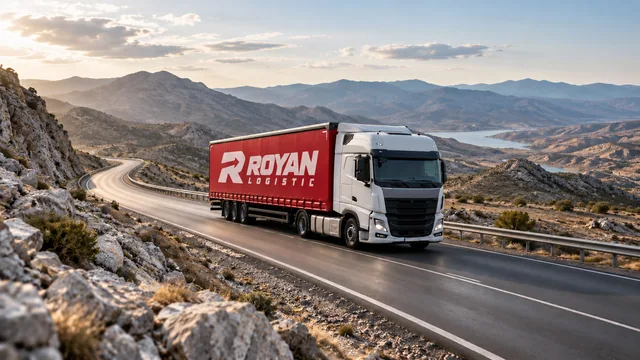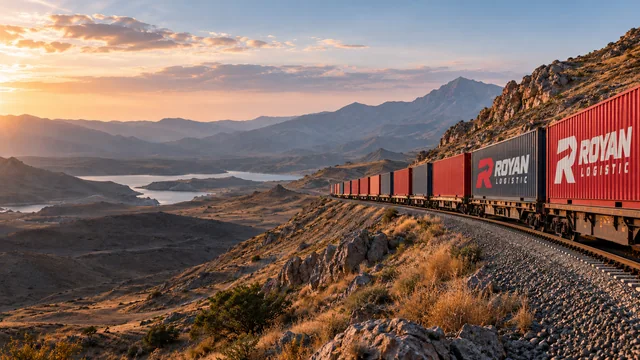
Iran borders Turkmenistan directly and has Caspian ports facing Kazakhstan and Turkmenistan, which makes it a natural gateway to Central Asia. Most cargo leaves north-eastern Iran through Sarakhs, Lotfabad or the Incheh Borun rail crossing, or sails from Amirabad or Anzali. Even so, every shipment beyond Turkmenistan crosses at least one transit country, so most of the work happens before departure: choosing the corridor, arranging transit permits and driver visas, aligning documents so they pass every border, and keeping a second option ready.
Gateways from Iran
- Sarakhs: the main road crossing into Turkmenistan towards Mary, Turkmenabat and Uzbekistan, and a rail border station with gauge-change facilities.
- Incheh Borun: the rail crossing on the Kazakhstan–Turkmenistan–Iran line, linking northern Iran with western Turkmenistan and Kazakhstan.
- Lotfabad: a road crossing north of Mashhad towards Ashgabat; an alternative when Sarakhs is congested.
- Caspian ports: Amirabad and Anzali (also Astara and Nowshahr) with sailings to Aktau in Kazakhstan and Turkmenbashi in Turkmenistan.
Main corridors
Iran–Turkmenistan–Uzbekistan road
Trucks cross at Sarakhs or Lotfabad, transit Turkmenistan on a designated route and enter Uzbekistan at Farap–Alat. From Bukhara the road continues to Samarkand and Tashkent, and on to Tajikistan, Kyrgyzstan and southern Kazakhstan. Details are on our Uzbekistan freight page.
China–Kazakhstan–Turkmenistan–Iran railway
This line connects China with Iran through Kazakhstan and Turkmenistan, entering Iran at Incheh Borun or Sarakhs. In the Iran-to-Central-Asia direction it suits bulky, containerised or bulk cargo for Kazakhstan, Turkmenistan and Uzbekistan. Because the track gauge changes at the border, bogie exchange or transshipment is part of the plan. See rail freight.
Caspian Sea
From Amirabad or Anzali, cargo can sail to Aktau or Turkmenbashi and continue by road or rail. It is useful for western Kazakhstan, the Turkmen coast and heavy or bulk cargo, but depends on sailing schedules and weather.
Comparing the options
Times are approximate from Iran and vary with borders, permits, wagon or sailing schedules and season.
| Option | Route | Best suited for | Approx. transit | Watch point |
|---|---|---|---|---|
| Road | Mashhad → Sarakhs or Lotfabad → Turkmenistan → Farap–Alat → Uzbekistan | Turkmenistan, Uzbekistan, Tajikistan, Kyrgyzstan; FTL and groupage | Tehran → Ashgabat 3–5 days; Tehran → Tashkent 6–9 days | Turkmenistan transit permit and fees |
| Rail | Sarakhs or Incheh Borun → Turkmenistan → Kazakhstan or Uzbekistan | Bulky, containerised and bulk cargo, not time-critical | Iran → Almaty 10–14 days | Gauge change, wagon allocation, last-mile trucking |
| Caspian sea | Amirabad or Anzali → Aktau or Turkmenbashi | Western Kazakhstan, Turkmen coast, heavy or bulk cargo | A few days at sea plus port time | Sailing schedule, wind, port waiting |
Country by country
| Country | Main route from Iran | Typical destinations | Details |
|---|---|---|---|
| Kazakhstan | Rail via Incheh Borun; road via Turkmenistan and Uzbekistan; Caspian to Aktau | Almaty, Shymkent, Aktau, Astana | Kazakhstan freight |
| Uzbekistan | Road via Sarakhs or Lotfabad and Farap–Alat; rail via Sarakhs | Tashkent, Samarkand, Bukhara, Fergana | Uzbekistan freight |
| Turkmenistan | Direct borders at Sarakhs, Lotfabad and Incheh Borun; Caspian to Turkmenbashi | Ashgabat, Mary, Turkmenabat, Turkmenbashi | Turkmenistan freight |
| Kyrgyzstan | Via Turkmenistan and Uzbekistan, then Fergana–Osh or Tashkent–Kazakhstan–Bishkek | Bishkek, Osh | Kyrgyzstan freight |
| Tajikistan | Via Turkmenistan and Uzbekistan, Oybek and Sariosiyo crossings | Dushanbe, Khujand | Tajikistan freight |
How we plan a Central Asia shipment
Corridor choice
The destination city, cargo type, delivery date and border conditions on the shipment date decide the route. A load for Bukhara does not travel the same way as a load for Aktau. The Iranian leg is planned with our Iran freight service.
TIR carnet and transit
Road cargo moves under customs seal with a TIR carnet, so it can cross transit countries without being opened at each border and reach the destination customs office intact.
Transit permits and driver visas
Transit documents and driver visas are arranged before departure. Turkmenistan needs particular care: its permit and fee regime for foreign trucks changes from time to time and approval can take several working days. We state in writing whether permits and fees are included in the quote.
Backup route
Snow in north-eastern Iran, queues at Sarakhs in harvest season or Caspian wind can hold a single-route plan for days. For time-critical loads we keep a second border or mode ready and re-confirm conditions just before loading.
Full truck or groupage
For up to about 33 euro pallets and 24 tonnes, a full truckload is the most efficient option. For a few pallets we look at groupage towards Tashkent and other main cities; consolidation adds a few days. See road freight.
Consignee-side coordination
Many delays happen at destination customs rather than at transit borders. Before departure we confirm the consignee's customs broker, unloading address and hours, and ask in Russian which extra documents may be requested.
Document checklist
- Commercial invoice and packing list (description, HS code, package count and weight identical to the CMR)
- Certificate of origin
- CMR consignment note and TIR carnet (road), or rail consignment note (rail)
- Export customs declaration
- Transit permits and driver visas; Turkmenistan transit permit
- Product conformity documents: EAEU (EAC) certification for Kazakhstan and Kyrgyzstan, national documents for Uzbekistan, Turkmenistan and Tajikistan
- Phytosanitary or veterinary certificates for food and agricultural goods
Kazakhstan and Kyrgyzstan are members of the Eurasian Economic Union and apply common customs rules; Uzbekistan, Turkmenistan and Tajikistan run their own import regimes. Payment and documentation requirements are reviewed per shipment against current regulations.
Seasonal planning
| Period | Main risk | What we do |
|---|---|---|
| Winter | Snow in north-eastern Iran, steppe blizzards, mountain passes in Kyrgyzstan and Tajikistan | Buffer days, a second route, heated or reefer trucks for freeze-sensitive cargo |
| Late March | Nowruz holidays slow border processing in Iran and the region | Load before or after |
| Summer | 40–45 °C in the Karakum and Kyzylkum deserts | Packing, pre-cooling and reefer trucks for heat-sensitive goods |
| Autumn | Harvest peaks at the borders; Caspian wind delays sailings | Early booking and a few days of flexibility |
What we carry
Typical Iranian exports to the region include building materials such as cement, tiles and stone, steel, polymers and petrochemicals, dried fruit, pistachios, fresh produce, dairy, detergents and household goods. In the other direction, we plan imports from Central Asia to Iran on the same corridors.
Why Royan Logistic
- Tehran-based planning around the north-eastern borders and Caspian ports.
- Road, rail and Caspian options compared for your cargo.
- Communication in Persian, English, Russian, Turkish and Chinese.
- A tracking link for every shipment, with documents such as CMR and invoice kept in one folder.
What we need for a quote
Origin and destination addresses, cargo type and HS code if known, packing, number of pieces or pallets, dimensions, total weight, target shipping date and any special handling. You receive a tracking code when you submit the request form; you can also reach us on WhatsApp or by email. Our quote states the corridor used and whether permits, port and waiting costs are included.
Frequently asked questions
How long does freight from Iran to Central Asia take?
By road, roughly 3–5 days from Tehran to Ashgabat and 6–9 days to Tashkent. Rail to Almaty takes about 10–14 days. Season, border queues, permits and schedules can change these approximate times.
Which corridor is best for Central Asia?
There is no single best route. Road via Sarakhs or Lotfabad suits Turkmenistan, Uzbekistan and Tajikistan; rail via Incheh Borun or Sarakhs suits bulky cargo for Kazakhstan; the Caspian suits western Kazakhstan and the Turkmen coast. We decide based on conditions on the shipment date.
Is a TIR carnet required?
For road cargo crossing transit countries under customs seal, the TIR carnet is the standard transit document and lets the load pass borders without being opened. Its use depends on route and national practice and is confirmed for each shipment.
Can I send a few pallets to Central Asia?
Yes, groupage options exist towards Tashkent and other main cities. Consolidation adds a few days compared with a full truck; options to Turkmenistan and Tajikistan are more limited.
When does the Caspian route make sense?
Sailing from Amirabad or Anzali to Aktau or Turkmenbashi suits western Kazakhstan, the Turkmen coast and heavy or bulk cargo. It depends on sailing schedules and weather, so we plan a few days of flexibility.