Iran's petrochemical and chemical industries produce many products that are classed as dangerous goods in international transport: resins and solvents, paints and varnishes, acids and alkalis, compressed gases and flammable liquids. On the import side, lithium batteries, aerosols and industrial chemicals are common. With this cargo, the work starts with identifying the product correctly, before any truck is booked. Royan Logistic plans every dangerous goods shipment around the product's class, its packaging and the rules of the countries it crosses.
Which rules apply?
Each transport mode has its own international rule set, and countries along the route may apply their own additional requirements:
- Road: ADR (European Agreement concerning the International Carriage of Dangerous Goods by Road)
- Rail: RID or the dangerous goods rules under SMGS, depending on the corridor
- Sea: the IMDG Code
- Air: IATA Dangerous Goods Regulations (DGR)
Transit countries may restrict certain tunnels, bridges, ferries or routes. We check these restrictions during planning.
Dangerous goods classes
| Class | Covers | Example |
|---|---|---|
| 1 | Explosives | Special permits required, assessed case by case |
| 2 | Gases | Aerosols, gas cylinders |
| 3 | Flammable liquids | Solvents, paints, thinners |
| 4.1–4.3 | Flammable solids and similar | Sulphur, some metal powders |
| 5.1–5.2 | Oxidisers, organic peroxides | Some fertilisers, hardeners |
| 6.1–6.2 | Toxic and infectious substances | Some pesticides |
| 7 | Radioactive material | Special permits required, assessed case by case |
| 8 | Corrosives | Acids, alkalis, batteries |
| 9 | Miscellaneous dangerous goods | Lithium batteries, some polymer beads |
Information we need for a quote
- Current Safety Data Sheet (SDS / MSDS)
- UN number, proper shipping name, class and packing group
- Packaging type (UN-approved drums, IBCs, boxes, etc.) and quantity
- Loading and delivery addresses and target date
If you are unsure whether your product is dangerous goods, section 14 of the SDS is a good place to start. Classification is the shipper's responsibility, and we check it with you.
Vehicle, driver and loading
- ADR-equipped vehicle: orange plates, labels for the cargo class, fire extinguishers and equipment
- ADR-trained, certified driver with written instructions
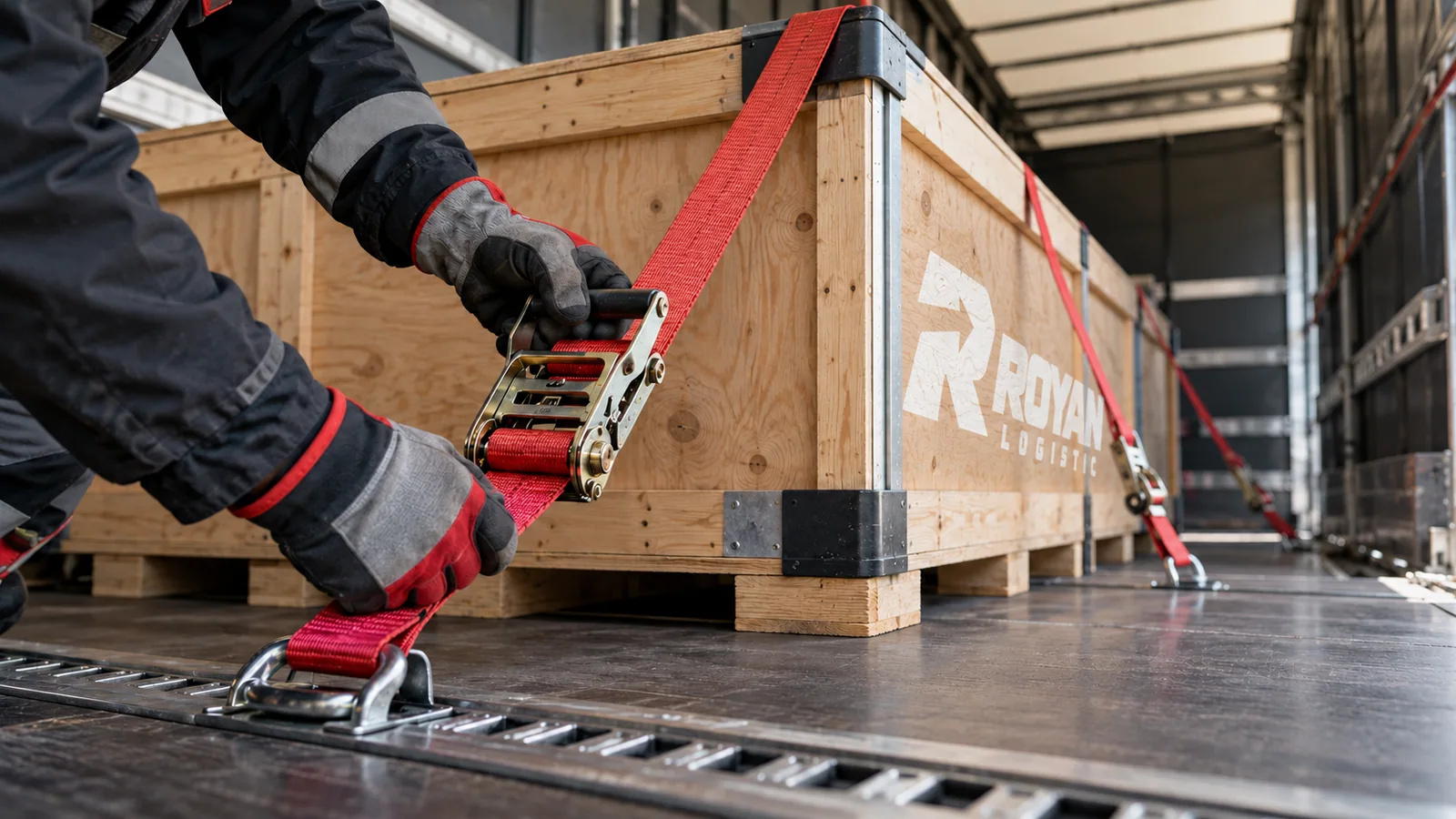
- Segregation of incompatible substances and secure load restraint
- Temperature-controlled vehicle or tanker where needed
Sea and rail legs
If the cargo continues by container from a port such as Bandar Abbas, the IMDG declaration, container packing certificate and the shipping line's acceptance are checked separately; some lines do not accept certain classes. On rail, the rules for the wagon type and corridor apply. See sea freight and rail freight.
Document checklist
- Dangerous goods transport document (DGD for sea)
- Safety Data Sheet (SDS)
- Commercial invoice, packing list and CMR
- Packaging approval certificates and analysis reports where required
Dangerous goods as groupage
Some dangerous goods can travel with other cargo in the same truck as long as segregation rules are followed, and limited quantity (LQ) and excepted quantity rules make some shipments simpler. We assess this per product and quantity; see groupage.
For a quote, send the SDS and cargo details through the form on our contact page.
Frequently asked questions
What information do you need to quote a dangerous goods shipment?
A current SDS, the UN number, class and packing group, packaging type and quantity, loading and delivery addresses and the target date. With this we can plan the vehicle, route and documents.
How do I know if my product is covered by ADR?
Section 14 of the SDS (transport information) shows the UN number and class. Classification is the shipper's responsibility; if you share the document, we check it together.
Can dangerous goods travel as groupage?
In some cases, yes. It depends on segregation rules, quantity and limited quantity (LQ) conditions; we assess it per product.
Are lithium batteries and aerosols dangerous goods?
Yes, usually class 9 (lithium batteries) and class 2 (aerosols). Depending on packaging and quantity, some simplified rules may apply.
Which rules apply if the cargo also goes by sea?
The IMDG Code applies to the sea leg, with an IMDG declaration and a container packing certificate. Whether the shipping line accepts the class is checked separately.
How is the price determined?
Class and quantity, packaging, vehicle type, route and transit restrictions, any sea or rail leg and the document requirements all affect the price. We prepare the quote on this basis.